Your work is good
Most developer portfolios are a grid of screenshots and a resume link. DevFolio Studio builds a custom, multi-page site that explains the thinking behind your work — so clients and hiring teams understand your value before they ever talk to you.

The real gap
A gallery of screenshots doesn't explain anything.
Most developer sites show what a project looked like. They rarely show what the developer decided, why, and what changed as a result. That gap is exactly where a visitor's confidence either forms or falls apart.
A client scanning a site in under a minute isn't judging your code — they can't see it. They're judging whether the site in front of them makes your thinking legible. If it doesn't, they move on, often assuming less skill than is actually there. The fix isn't more polish. It's better framing: showing the problem you solved, the approach you took, and the result that followed. That's a structural choice, not a visual one, and it's the one most portfolios skip.
Presentation, not decoration
Screenshots show output. Context shows judgment.
A screenshot answers "what did you build." It never answers "why did you build it that way," which is the question that actually determines whether someone hires or hires you again.
DevFolio Studio structures each project page around the decisions behind the work — the constraint you were given, the approach you chose, and the outcome that followed. That structure does the explaining a screenshot can't, and it's the difference between a viewer skimming past your work and one who actually understands it.
The problem stated plainly
What the project needed to solve, in language anyone can follow.
The approach you chose
The reasoning behind key technical or design decisions.
The result that followed
What changed because of the work, described honestly.
Why structure earns trust
Trust is built by how the work is organized, not by how loud it looks.
Visitors don't trust a site because it has effects and animation. They trust it because it's easy to follow — a clear path from "who is this person" to "what have they done" to "how do I reach them."
A site with generous spacing, a consistent hierarchy, and content that's easy to scan reads as intentional. That impression transfers directly to how the visitor judges your actual skill, even before they read a single project in depth. Structure is a trust signal in itself.
A different starting point
Start with the work. Let it carry the argument.
A lot of developer sites lead with a bio and bury the projects below the fold. We build the opposite: the work leads, because the work is the actual evidence a visitor came to evaluate. Everything else — bio, skills, contact — supports that evidence instead of competing with it.
Projects come first
Selected work sits above the fold, not three scrolls down.
Bio supports, doesn't lead
Your background explains the work — it doesn't replace it.
Contact stays reachable
A clear path to reach out is never more than a scroll away.
The offer, plainly stated
One custom portfolio website, built around your work.
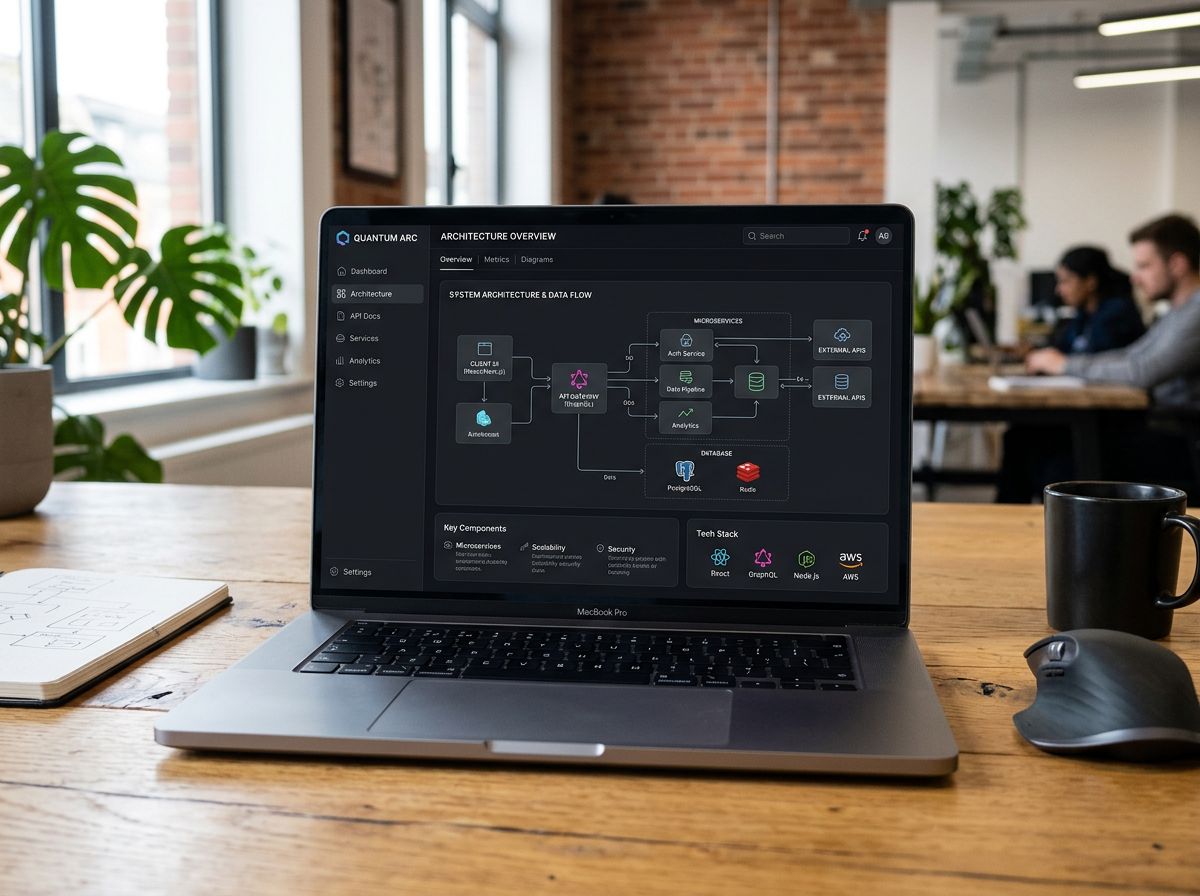
DevFolio Studio builds a tailored, multi-page portfolio site: a home page that introduces you clearly, project pages that explain your work in depth, a services or skills page suited to how you want to be evaluated, and a contact page that makes reaching out simple.
Nothing here is a template you fill in. Each site is planned around your actual projects and how you want to be positioned — as a freelancer, a job candidate, or a consultant.
Words, not just layout
The layout is only half the job. The words carry the rest.
A well-designed site with vague copy still fails to explain your value. We write the messaging alongside the design — the headline that frames who you are, the project summaries that make sense to a non-technical reader, and the language that positions you the way you actually want to be seen.
Positioning language
Copy that states what kind of work you take on and why it matters.
Plain-English project summaries
Technical decisions explained so any reader can follow the value.
Consistent voice
One tone across every page, so the site reads as one considered thing.
Where the proof lives
Each project gets its own page, not a caption.
A single line under a screenshot can't carry a project's story. That's why each selected project on your site gets a dedicated view — enough room to explain the brief, the approach, the technical choices, and the outcome, in a format a reader can actually follow.
This is where a visitor's opinion of your ability actually forms. We treat that page with the attention it deserves — you'll see exactly how this works on the Work page.
Skills that mean something
A list of technologies proves nothing on its own.
Anyone can list a stack. What actually reads as credible is seeing that stack applied — a skill tied to a real decision inside a real project, instead of floating in a badge grid at the bottom of the page. We place your skills next to the work that demonstrates them.
Tied to real projects
Every listed skill connects back to a project page where it's used.
Grouped by relevance
Organized by what you actually do, not an alphabetical dump.
Getting from interest to inquiry
A visitor who's convinced shouldn't have to search for how to reach you.
Once a visitor is persuaded, the next step needs to be obvious — not a buried email address or a contact form on page four. Your site includes a clear, always-reachable contact path built for the kind of conversation you want to start: a project inquiry, a hiring conversation, or a consulting request.
The page works the same way on a phone as it does on a laptop, because a hiring manager reviewing candidates on their commute deserves the same clarity as one at a desktop.
Built for three situations
Different goal, same underlying need: a site that explains your work.
Freelance developers
Standing out from other freelancers and winning better-fit projects instead of competing purely on price.
Job-seeking developers
Giving hiring teams a clearer picture of your range and thinking than a resume alone can provide.
Developer consultants
Framing your expertise and the kind of work you take on, so outreach starts from a position of authority.
For freelance developers
Clients decide fast. Your site needs to move just as fast.
A prospective client comparing freelancers is often looking at several sites in one sitting. If yours takes longer to understand than the others, you're already behind — regardless of how good the underlying work is.
A structured, project-led site shortens that evaluation. It shows range, shows judgment, and gives the client enough confidence to reach out instead of moving to the next tab.
For job-seeking developers
A resume lists roles. A site can show how you actually think.
Hiring teams spend seconds on most candidate links. A site that gets straight to well-framed project work gives them a reason to spend more than seconds — and gives you a chance to be remembered for substance, not just for showing up.
This isn't about implying a guaranteed outcome. It's about giving your actual ability the clearest possible presentation, so the decision is based on real signal instead of a thin first impression.
For developer consultants
Authority comes from clarity about what you take on — not from volume.
A consulting site that tries to appeal to everyone ends up convincing no one. The stronger move is precision: a clear statement of the kind of work you specialize in, backed by projects that demonstrate exactly that specialty.
That precision is what makes outreach easier on both sides — prospects self-select before they even message you, because your site already told them whether they're a fit.
From conversation to launch
A straightforward path, not a black box.
Understand your work and goals
We start by learning which projects matter, who you're trying to reach, and what outcome you actually want from the site.
Plan the structure and messaging
We map the pages, decide how each project should be framed, and draft the language that carries your positioning.
Design and build the site
We build the actual multi-page portfolio — home, work, services or skills, and a contact path — around that plan.
Review and hand off
You review the finished site, we adjust where needed, and you leave with a site ready to represent you.
Why specialization matters here
A generic personal-branding site solves a different problem than yours.
General personal-brand builders are built for a wide range of professions and treat "projects" as an afterthought. Developer work has its own logic — technical decisions, tradeoffs, and outcomes that a generic template doesn't know how to frame.
DevFolio Studio works with one audience: web developers. That focus means the structure, the language, and the way projects are presented are built specifically around how your work is actually evaluated — by clients, hiring managers, or fellow developers.
The look, on purpose
Clean and technical, because your work deserves the focus.
The sites we build favor restraint: generous spacing, a controlled color palette, and typography that stays out of the way. Nothing competes with the projects for attention, because the projects are the point.
That discipline isn't a style choice made for its own sake — it's what makes the work itself easier to evaluate, and it's the same visual logic you're looking at right now.
See it in practice
Want to see how a project page is actually framed?
The Work page walks through how selected projects get structured — problem, approach, result — and why that structure changes how a visitor evaluates your ability.
See how work is presentedWho's behind this
A studio built around one belief: your work deserves better framing.
DevFolio Studio exists because too many capable developers are represented by sites that undersell them — not because the work is weak, but because the presentation never explains why it's strong.
If you want the fuller picture of how we think about this and why it shapes the way we build, the About page lays out the philosophy behind the studio.
Ready to have a site that actually explains your work?
Start a conversation about a custom portfolio website built around your projects, your goals, and how you want to be evaluated.
Let's Build Your Project